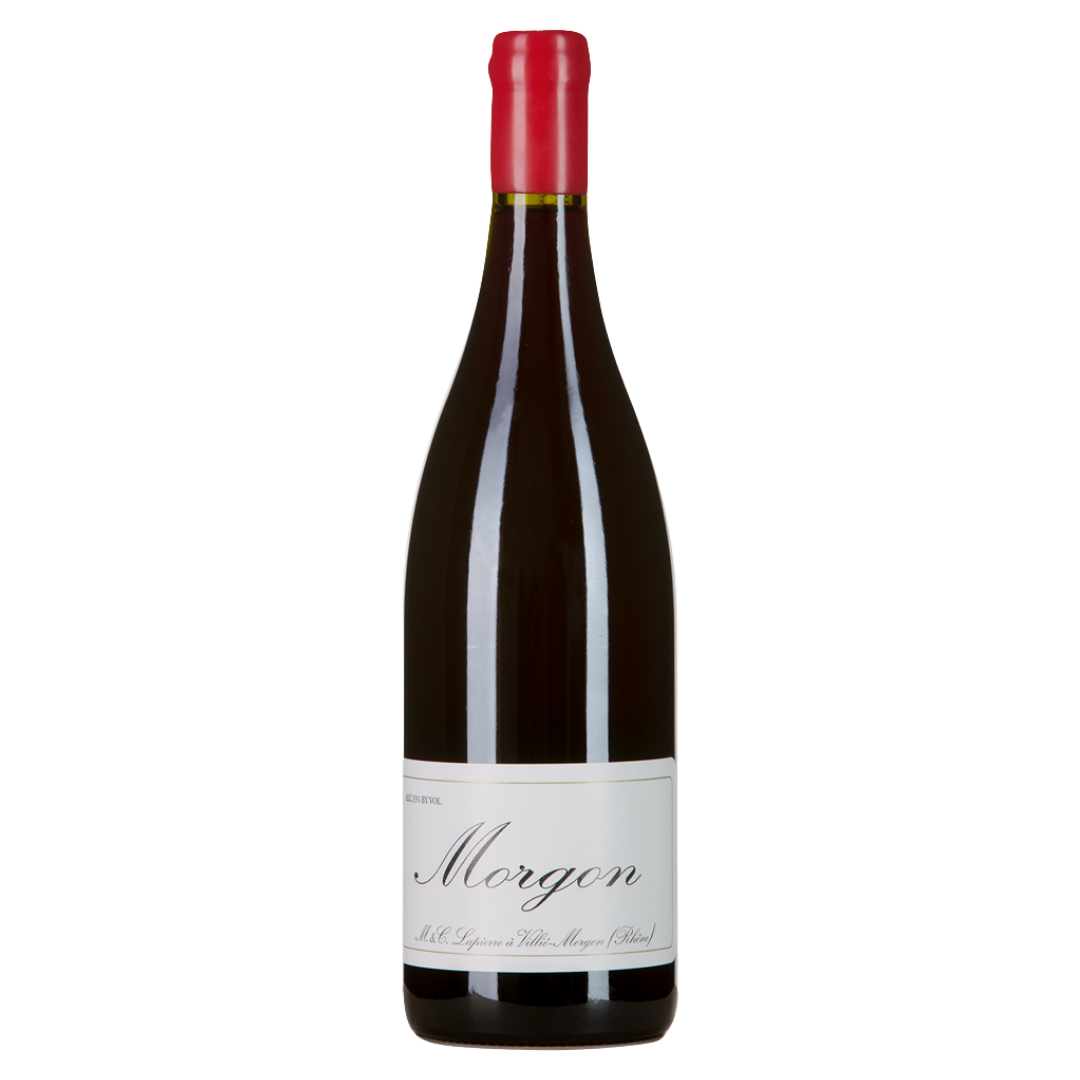
Domaine Marcel Lapierre
Domaine Marcel Lapierre Morgon Vieilles Vignes 2024
Domaine Marcel Lapierre Morgon Vieilles Vignes 2024
Beaujolais, France
Gamay
There are wineries, and then there is Domaine Marcel Lapierre. Marcel took over the family domaine in 1973, and in 1981 he met Jules Chauvet, a chemist and winemaker who had been warning people about chemical fertilizers since the 1950s. Chauvet talked about going back to the old ways. No herbicides, no pesticides, minimal sulphites, no chaptalization. Marcel listened.
Three other local guys (Guy Breton, Jean-Paul Thévenet, and Jean Foillard) followed along and did the same. Kermit Lynch started calling them the Gang of Four, and the name stuck. Together, they changed what people thought Beaujolais could be: serious, age-worthy wines from Cru Beaujolais.
Marcel passed away at the end of harvest in 2010, which feels almost too poetic. His son Mathieu and daughter Camille run things now the same way Marcel did.
Now, about the soil. Because it matters here. Over 500 million years ago, volcanic activity under the ocean and a massive continent collision created these hills. As the magma cooled slowly, it formed this coarse-grained rock. When the oceans rose, this area became an island coast. The thing is, the Beaujolais crus were never submerged. No limestone ever formed here.
Over millions of years, slow erosion of that coarse-grained rock created a layer of sand they call "gore." Sometimes just a few centimetres deep, sometimes up to a metre. And here's the really wild part: during the ice age, the glaciers stopped just north of here. So this top layer never got scraped away. It's still here, exactly where it formed.
The Morgon appellation sits on what they call "roche pourrie." Rotten rock. Decomposed volcanic stone that gives the wine its character. Poor soil, perfect for Gamay. The kind of ground that makes vines work for it.
This Vieilles Vignes is the essence of that place. Bright, fleshy fruit. That joie de vivre thing that Marcel seemed to bottle right along with the wine. Aged nine months in old oak foudres and fûts, on its fine lees, doing its thing.
Why Morgon Matters So Much
Why Morgon Matters So Much
Morgon is one of the most important Crus in Beaujolais because it produces powerful, age-worthy, complex reds that completely dismantle the misconception that Beaujolais is just light, fruity, forgettable Nouveau. As one of the ten Crus, it exists on a different plane entirely, built for depth, built for time.
The vineyards, especially on the famous Côte du Py, are planted on something called roches pourries ("rotten rock") decomposed shale and schist that gives the Gamay here a mineral grip and earthy complexity you don't find anywhere else. It's why Morgon wines are often described as the most "masculine" of the Crus (we hate that sort of semantics but trust it carries the message), with the ability to age 5, 10, even 15 years, transforming bright red fruit into something deeper: cherries soaked in kirsch, stone fruit macerated in eau-de-vie.
This is the Cru they gave a verb. Morgonner means to taste like Morgon, that unique, terroir-driven thing that happens as these wines age. And it's where the revolution started. The Gang of Four (Lapierre, Foillard, Breton, Thévenet) were based here, fighting for organic farming, natural fermentation, minimal intervention, long before it was trendy. They proved Beaujolais could be serious without being stuffy, that Gamay could stand next to Burgundy and hold its own for a fraction of the price.
Morgon matters because it's Beaujolais that grows up. That asks you to pay attention. That rewards you for waiting. It's the Cru that changed everything.